Passer au contenu
Voir nos promotions  |  Frais de port offerts pour toute commande supérieure à 75 €/CHF
Search
Produits populaires
Which neuromuscular EMS for the Injured Athlete?

Which neuromuscular EMS for the Injured Athlete?

When injury strikes, choosing the right electrostimulation can be a determining factor in your recovery journey. In this article, we'll explore the key elements to consider helping the injured athlete make the optimal choice when it comes to electrostimulation. Discover how this technology can accelerate your return to fitness and put you back on the path to sporting excellence.  

1. Understanding Neuromuscular Electrical Stimulation (NMES): A Key Ally for Injured Athletes 

An increasing number of athletes have incorporated neuromuscular electrostimulation into their physical preparation or to facilitate recovery after intensive training or competition. 

In the event of injury, the most reckless apply stimulation sessions that are often inappropriate, or even deleterious to the healing of their injury, without taking any precautions and despite the manufacturer's warnings. Others, more cautious, prefer to ask their physiotherapist for advice on the choice of program to use and the specific rules for its use. 

Physiotherapists can sometimes be at a loss, as they are not always fully aware of the differences between the stimulation programs they use in the office to restore their patients' muscular qualities, and those used by healthy, trained athletes to develop specific muscular qualities. 

2. The Benefits of Electrotherapy in the Recovery Process 

The famous cross-innervation experiment (carried out in animals) perfectly illustrates the remarkable adaptability of muscle tissue. Thus, when a slow muscle is reinnervated with nerve fibers originally innervating a fast muscle, its speed of contraction increases, while conversely, if a fast muscle is reinnervated with nerve fibers originally innervating a slow muscle, the reinnervated muscle becomes slower. 

Neurological activation, and consequently the activity or inactivity to which the musculature is subjected, will therefore lead to profound modifications: typological (percentage of type I and II fibers), mechanical (force and speed of contraction), biological and metabolic (ATP resynthesis)... 

While beneficial muscular adaptations resulting from exercise or training appear slowly and progressively, unfavourable adaptations following de-training or, worse still, inactivity, appear much more rapidly. This is one of the reasons why training resumes so painfully after even a relatively short break. 

In the event of trauma or pathological conditions affecting the muscle itself, or the structures of the musculoskeletal system with which the muscle interacts, the loss of muscular qualities can be extremely rapid. Pain, inflammation and stiffness are often responsible for a disorganization of the muscular system. 

We must therefore always bear in mind that the injured athlete's muscles no longer have their original potential, and should therefore only be used with exercises appropriate to their new condition. 

3. Electro muscle stimulation for rehabilitation  

Two basic programs adapted to the physiological properties of type I (slow) and type IIb (fast) muscle fibres are commonly used by rehabilitation specialists: 

Muscle atrophy program 

The fact that slow fibers are affected more than others following immobilization or reduced use is now well documented in the scientific literature. The reason for this phenomenon is the overwhelming predominance of our type I fibers, which we use on average 16 hours a day, as opposed to our fast fibers (a few minutes a day in sedentary people, much more in some athletes). 

The “Muscle Melt” program is responsible for maximum solicitation of type I fibres, using the maximum tetanization frequency of these fibres (30 - 35 Hz) combined with long contraction durations (around 6 seconds) interspersed with rest periods of the same duration. 

Another feature of this type of electro-induced exercise is the phenomenal amount of work imposed on the stimulated muscle, with around 75 contraction-rest cycles. 

The aim and effects of this program are to restore muscle trophicity and volume. 

Reinforcement program 

The aim of this program is to restore muscle strength to its pre-injury level and/or to the contralateral side. 

The principle is to impose maximum tetanic contractions (60 - 70 Hz) on fast fibres, with shorter contraction durations and longer rests than in the amyotrophy treatment program. 

This program is used either as a first-line treatment in the absence of amyotrophy, and when a strength deficit is detrimental (e.g. for early stimulation of fibular muscles after ankle sprains), or once muscle volume has been recovered using the “Muscle Melting” program. 

A special case is the amyotrophy of high-level athletes, for whom type I and type IIb fibers may be jointly responsible, given the exceptional muscular typology of these individuals. In such cases, it is advisable to apply a “Muscle toning” session AND a “Strengthening” session on a daily basis. 

4. Electro muscle stimulation to complete Conditioning  

Recovery programs  

Probably the most widely used and appreciated by athletes, recovery programs (recovery after training or recovery after competition) use all low frequencies, in decreasing order, in a succession of sequences each lasting 2 to 3 minutes. The benefits are a draining effect by increasing blood flow (9Hz - 7Hz), an analgesic effect by increasing endorphin production (6Hz - 4 Hz) and a relaxing effect for the lowest frequencies (3Hz - 1Hz). Taken together, these effects promote muscle recovery after exercise, but are of little use in rehabilitation, where it is more often preferable to focus on one of these 3 effects. 

A man using the Compex SP 8.0 EMS muscle stimulator for recovery on his quad muscles

Complementing Muscular Physical preparation  

As a complement to voluntary training, athletes can use electrostimulation to improve their muscular qualities in a discipline-specific way. To this end, 4 types of program are available, which correspond to the physiological characteristics of the 4 basic qualities of physical fitness: endurance, resistance, strength and explosive force. 

Endurance programs 

The ability to sustain long-duration efforts depends on 2 elements: 

- The efficiency of oxygen transport, which results from the performance of the cardiovascular system, for which electrostimulation has no effect. 

- The muscle's ability to resynthesize ATP with oxygen. 

It is on this second point that electrostimulation can act, by improving the main factors on which muscular oxidative capacity depends (percentage of type I fibers, capillary network, number and size of mitochondria, activity of oxidative enzymes). The electro-induced work regime consists of very long contractions well below maximum tetanization (10-18 Hz), and very short rests, with of course a very high number of repetitions (>200). 

Resistance programs 

These programs improve the ability to sustain a sub-maximal effort for a few tens of seconds to a few minutes, or to repeat muscular contractions performed at a high percentage of maximum strength (some call this strength endurance). They improve the muscle's lactic acid tolerance. 

These programs impose high-power contractions (50Hz - 70 Hz) prolonged over long periods and separated by short partial rests. This is a work regime designed to voluntarily induce fatigue to develop greater muscular resistance to fatigue and lactic acid. 

Strength programs 

Developing maximum strength requires trained athletes to use high frequencies (up to 100 Hz). Despite the short duration of contractions, such high frequencies can be responsible for muscle fatigue, which rapidly deteriorates the quality of contractions and therefore impairs training efficiency. This is avoided by very long rest periods (around 30 sec) and a maximum number of cycles of 40. 

Explosive strength programs 

Explosiveness (or speed of contraction) is defined by the time it takes a muscle to develop its maximum strength. This quality, which is crucial for most sporting disciplines (running speed, rebound, throws and shoots, etc.), can be developed by means of electrostimulation using supra-tense frequencies (104 Hz - 120 Hz). Even more so than with “Strength” programs, fatigue is limited by the use of even shorter contraction times (3 sec) and longer rests, with a number of cycles not exceeding 30. 

5. Practical Tips for Safe and Effective Use 

No substitution 

As a general rule, programs used to complement physical preparation should not be used as a substitute for stimulation programs designed for rehabilitation purposes. 

Indeed, the parameters of these programs would lead to over-stimulation of convalescent muscles, and would be responsible for premature fatigue, resulting in a loss of efficiency. 

Patients should therefore be told that they can only resume complementary stimulation sessions once their return to the field has been authorized. 

Prohibition in the case of fragile lesions 

For certain pathologies affecting the integrity of the musculotendinous complex (muscle tear, tendon rupture, tendon plasty removal, etc.), it is reasonable to advise total abstention from all neuromuscular stimulation programs carried out by the patient alone for the duration of the healing process. 

This does not, of course, prevent the therapist from applying a specific program during the same period, should this be of interest. 

Non-restrictive “distance” authorization 

The injured athlete often has time on his hands and suffers from not being able to accelerate the healing process of his injury any further. This is the ideal time for him or her to set up specific “distance” work to develop the upper body, for example, during rehabilitation for ACL ligamentoplasty. The physiotherapist can then advise him which muscles he can stimulate using the physical preparation program adapted to his sport, and even suggest a schedule for his stimulation sessions. 

Complementary use of rehabilitation must be discussed 

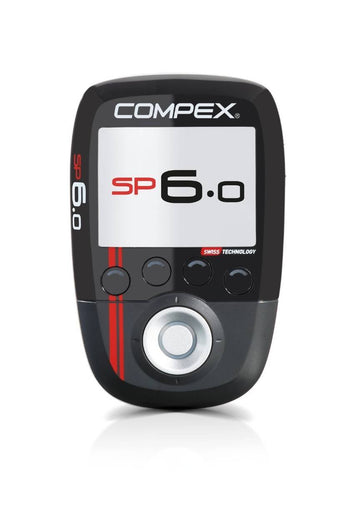
Some athletes own COMPEX stimulator models which, in addition to the physical preparation programs, have basic programs adapted to rehabilitation: muscle melting and strengthening (Compex SP4.0, SP6.0, SP8.0). In this case, and if their rehabilitation does not require any particular precautions, the physiotherapist can advise the patient to apply a second session during the day, or one or two sessions on days when the patient is not undergoing rehabilitation, using the same stimulation program as the one used in the office. 

6. Conclusion 

Throughout the recovery process, the physiotherapist is the injured athlete's first point of contact. More and more athletes are using or have “heard of” electrostimulation as a complementary technique to physical preparation or rehabilitation, without fully understanding the significant differences between these two types of indications. It is only with a minimum understanding of the technique that the physiotherapist will be able to answer questions or advise the athlete judiciously on what he or she can or must not do with his or her personal stimulator, or even, in certain cases, recommend a particular model to be able to safely complete the work carried out during treatment. 

References 

Soutenus par des études cliniques prouvant leur efficacité, les électrostimulateurs Compex appartiennent à la catégorie des dispositifs médicaux de classe II et répondent également aux exigences de la norme médicale européenne 93/42 CEE.

Votre Panier ( 0 )

Votre panier est actuellement vide.