🗣️ Author: Nicolas Dayez - runner, blogger, founder of Athlé expliqué.
The anaerobic threshold is one of the most important physiological indicators for endurance runners. It is the critical point where the body shifts from a stable aerobic state to an accumulation of lactic acid, when the legs become heavy and sustaining the effort becomes difficult.
Pushing this threshold higher means increasing your ability to run faster for longer without breaking down. Electrostimulation offers an innovative and scientifically validated solution to enhance this physiological performance.
By acting directly on muscle fibers and metabolic adaptations, neuromuscular electrostimulation can significantly raise your anaerobic threshold, transforming your approach to endurance training.
Understanding the anaerobic threshold and its role in endurance
The anaerobic threshold, also known as ventilatory threshold 2 (VT2), marks the moment when your body begins to accumulate lactic acid faster than it can clear it. At this intensity—generally between 85% and 90% of maximum heart rate—metabolic balance breaks down and muscle fatigue accelerates.
Below the anaerobic threshold, your body functions aerobically: it produces energy with oxygen and lactate removal remains stable. Beyond this point, you enter the “red zone,” where energy demand exceeds the body's ability to eliminate metabolic waste. The legs grow heavy, breathing becomes labored, and maintaining pace becomes a challenge.
For a runner, increasing the anaerobic threshold means being able to sustain a faster pace for longer without slipping into anaerobic conditions.
How does muscle electrostimulation work?
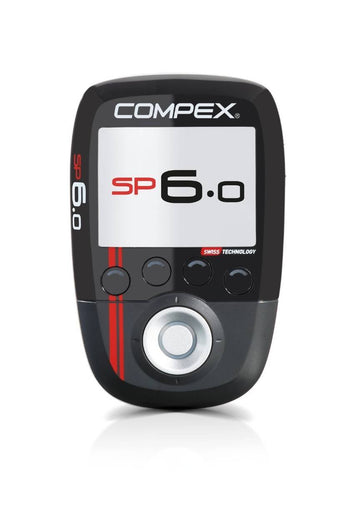
Neuromuscular electrostimulation uses electrical currents to stimulate muscle fibers through electrodes placed on the skin. Unlike voluntary contractions controlled by the brain, electrostimulation bypasses the central nervous system and directly activates the muscles.
Electrical impulses, set at specific frequencies (typically between 1 and 150 Hz), trigger contractions that can be as intense as traditional training. Electrostimulators can produce contraction intensities ranging from 58% to 126%, depending on the device and the athlete.
To improve the anaerobic threshold, medium frequencies (around 50 to 100 Hz) are used to progressively recruit muscle fibers, mimicking high-intensity training without requiring the same neural effort.

Effects of electrostimulation on metabolic adaptations
Improved glycolytic enzyme efficiency
Raising the anaerobic threshold relies on optimizing glycolytic enzymes responsible for energy production in anaerobic conditions. Studies show that electrostimulation increases levels of succinic dehydrogenase, a key enzyme in lactate utilization.
By strengthening these enzymes, muscles become more efficient at producing and clearing lactate, allowing you to sustain intense effort for longer.
Increased muscle capillarization
Electrostimulation generates micro-contractions that stimulate blood flow at the muscular level. This improved circulation increases capillary density, allowing greater blood supply to active muscle fibers.
Better oxygenation facilitates lactate removal and enhances nutrient transport for energy production.
Muscle fiber transformation
Electrostimulation promotes an increase in type IIa fibers (fatigue-resistant and anaerobic) and a decrease in type IIb fibers (less resistant to fatigue).
Type IIa fibers are particularly effective for efforts lasting from 30 seconds to several minutes at high intensity—precisely the zone corresponding to anaerobic threshold intensity.
More effective lactate clearance
After intense effort, electrostimulation used in active recovery mode accelerates lactate elimination. Research shows that blood lactate levels return to baseline more quickly after electrostimulation than after passive recovery.
This enables faster recovery between sessions and better overall training quality.

Integrating electrostimulation to increase the anaerobic threshold
Before high-intensity sessions
Use electrostimulation before threshold workouts to prepare the muscles. A 10–15-minute stimulation program at medium frequency increases muscle temperature and optimizes fiber recruitment, improving performance and adaptation.
During the session
Some experienced athletes use portable electrostimulators at low intensity during threshold work to slightly increase muscle recruitment without adding mental fatigue.
After training: active recovery
A 15–20-minute recovery session helps eliminate lactate more quickly while supporting muscle repair.
This protocol improves mitochondrial density, optimizes nutrient utilization, and prepares muscles to adapt for the next session.
Recommended protocol
Frequency of use
For lasting results, use electro muscle stimulation three to four times per week:
-
Two active recovery sessions after training (15 minutes each)
-
One to two muscle preparation sessions before threshold workouts (10 minutes)
Intensity and frequency
Use frequencies between 50 and 100 Hz to target anaerobic adaptations. Intensity should be progressive and strong but not painful. Comfort is essential—painful stimulation is counterproductive.
Target muscle areas
Focus on quadriceps, calves, glutes, and hamstrings—the primary muscles involved in running.
Session duration
Sessions generally last 15–20 minutes per muscle group, long enough to stimulate adaptation without causing excessive fatigue.
Expected results and adaptation timelines
-
2–3 weeks: improved recovery and lighter legs after effort
-
4–6 weeks: noticeable metabolic adaptations and better threshold pace
-
8 weeks: potential 2–5% increase in anaerobic threshold, translating into faster 10 km times or improved pace sustainability
Limitations and considerations
Electrostimulation does not replace traditional training. It is a complementary tool that enhances natural physiological adaptations.
A balanced program combining threshold sessions, aerobic base work, strength training, and recovery remains essential.
Before starting, assess your current anaerobic threshold using a 30-minute maximal steady-pace test or a progressive lactate test. Consult a sports doctor or physiotherapist if you have a history of injury or medical conditions.
Conclusion
Increasing the anaerobic threshold is one of the most effective strategies for improving endurance performance. Neuromuscular electrostimulation enhances glycolytic enzyme activity, increases capillarization, supports beneficial muscle fiber adaptations, and optimizes lactate clearance.
When strategically integrated before threshold sessions and after intense efforts for active recovery, electrostimulation helps progressively raise your anaerobic threshold.
The result: run faster for longer, improve your half-marathon and marathon performance, and finish strong with responsive legs.